
Sections
The Vélodyssée is the French section of EuroVelo 1: a waymarked itinerary that leaves the Breton canals, crosses the pine forests of the Landes and finishes on the Basque coast. You can ride it end to end or in stages. Almost every day there is a train station nearby.
The best part is the cycling infrastructure along most of the route: plenty of cycle path separated from traffic, campsites with facilities and offers for cyclists, fairly clear route signage, and so on.
Prices
| Riding the Vélodyssée | Free |
| Camping (two people, same pitch) | From €6/night |
| Trains and ferries | From €3/leg |
Riding the Vélodyssée
Free. It runs on public rights of way and is waymarked throughout. No fees or permits are needed to ride it.
Camping
From €6/night per person. Prices vary by campsite, but municipal campsites and other budget options exist on most stages. Camping L’Orée des Bois (Royan)

The Accueil Vélo network brings together accommodation with bike storage, a repair kit and often a single night with no surcharge. On the official site you can filter by «à la nuitée», «forfait cycliste» and lightweight accommodation: it is the way to avoid two- or three-night minimums in July and August.
If you prefer a bed, search Booking for La Rochelle, Rochefort or Bayonne and compare with camping: in high season the gap narrows, and in winter the campsite may not even be open.
Bike hire (optional)
From €15/day. Plenty of companies offer local hire, especially in the main cities, but the price does not cover returning the bike to another city. Cycling Tour La Rochelle
Ferry and train
The Gironde crossing is the only link you pay for separately mid-route: from €7 per leg per person and from €3 per leg for the bike, from April to October. Out of season the adult fare drops. Check the department’s website before you set off, because the line is under works until mid-December 2026.
On the train, the bike is never included in the passenger’s ticket: from €3 per leg on Nouvelle-Aquitaine lines during the summer, free but compulsory booking in Pays de la Loire, and from €10 per leg on TGV or Intercités. Outside the summer window, regional trains carry it free and without booking if there is space.
Videos
The official presentation of the route (three and a half minutes, in French): landscapes and atmosphere along the way, with no stage-by-stage directions.
An actual ride of the La Rochelle–Rochefort stage (in English): useful for seeing the type of surface and surroundings, not as a difficulty guide.
Photos






Difficulty
Nearly 80% of the route runs on a greenway or cycle path and the profile is flat, with a few local exceptions. It is not a mountain route and it requires no technique.
- Comfortable: stages of 14–50 km, gentle gradients and services every few kilometres. Any central stage works as a starting point.
- More demanding: Roscoff–Morlaix on shared, rolling road, the climb beside Lac de Guerlédan, the dunes between Hourtin and Lacanau, Capbreton–Bayonne and the Basque finish.
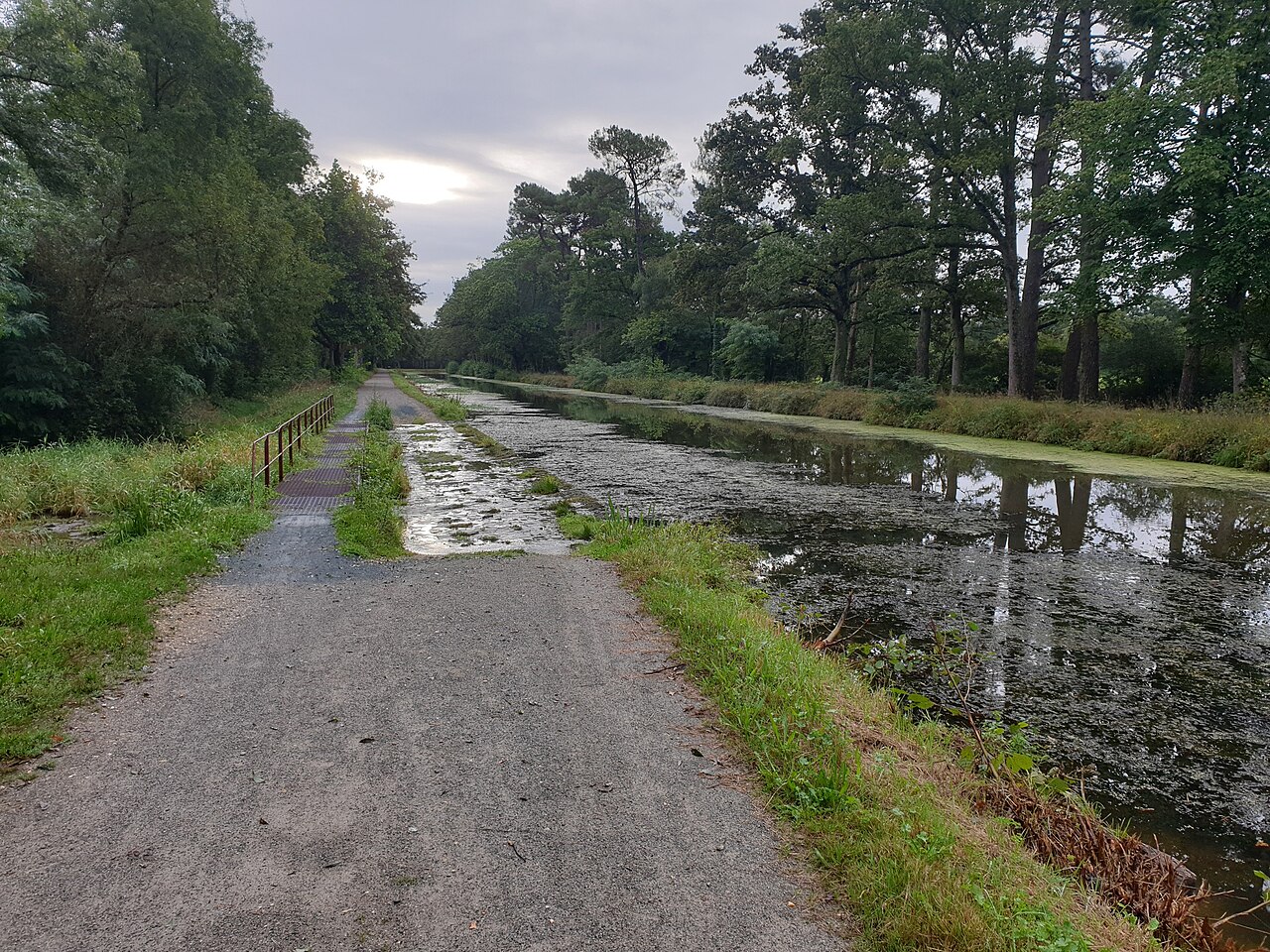
- Surface: in Brittany, Loire-Atlantique and Charente-Maritime there are rough, stony sections; the towpath turns muddy after heavy rain.
- Traffic: the passes through Nantes, La Rochelle or Bayonne need attention, and in summer the shared coastal roads fill up.
- With children: better to stick to car-free sections and short days; the full crossing with small children is too long.
You do not need a special bike: a hybrid, trekking or gravel bike with 35–40 mm tyres is enough. An electric bike helps with the wind and the panniers, but adds weight and a dependence on plug sockets.
Alternatives
There is no fixed length and no stage plan you have to follow. The route splits into four blocks, each with its own character. You can ride just one of them, or chain them all together.
| Stage | approx. km | What you’ll find |
| Roscoff → Nantes | 379 | Nantes à Brest canal, Josselin, Redon. The most rural and the wettest. |
| Nantes → La Rochelle | 357 | Loire estuary, Vendée coast and marais poitevin. The easiest place to start. |
| La Rochelle → Royan | 133 | Charente-Maritime, Rochefort and Marennes. Ends with the Gironde ferry. |
| Royan → Hendaye | 406 | Gironde, the pine forests of the Landes, Arcachon, Biarritz and the Basque coast. |
Roscoff → Nantes: the canal
The most rural and wettest part. You leave Roscoff for Morlaix and pick up the Nantes à Brest canal among locks, forests and stone villages. Josselin and Redon are the most useful stops; the surface can be rough and the path turns muddy after heavy rain.
Nantes → La Rochelle: the Vendée coast
From the Loire estuary to Les Sables-d’Olonne: Pornic, salt marshes, pines and beaches. It is the simplest block for a first crossing, with short stages and frequent services. In summer the shared coastal roads get congested.
La Rochelle → Royan: Charente and the ferry
An urban and coastal route between La Rochelle, Rochefort and Marennes, with the marsh and oysters as scenery. The unavoidable link is the Royan–Le Verdon ferry; check timetables and works before booking.
Royan → Hendaye: Landes and the Basque Country
The longest block: the Gironde, the Landes pine forest, the bassin d’Arcachon, Biarritz and the Basque coast. It includes the current closure between Grand Crohot and Lège-Cap-Ferret, so check the official alternative before committing to bookings.
If you only have a week
Nantes–La Rochelle is the best-balanced combination: around 357 km, stations at both ends and plenty of places to stop. La Rochelle–Royan packs Charente and the ferry into a few days, and Nantes–Pornic works for a three- or four-day escape. To stretch a day, the official loops run from 20 to 80 km.
Komoot · the Vélodyssée collection in 21 stages
When to go
- Best: May to June and September to early October. Services open, fewer people and mild temperatures.
- Summer: possible, but busier and pricier on the coast; bike booking on the train is no longer optional and campsites require minimum stays.
- Winter: many campsites and hire shops close. The towpath turns muddy and there are fewer services, though the route stays waymarked.
- Watch the wind: the prevailing westerly and northwesterly favours the Roscoff → Hendaye direction. In the Landes and on the Basque coast it can change a day completely.
Rain can turn up in any month and affects above all the sections with dirt paths.
Mean air temperature (°C)
La Rochelle · monthly averages 2001–2025
Pros
- It is waymarked in both directions and split into short stages: you do not have to plan the route.
- Almost all of it runs on greenway or cycle path and the profile is flat, so it works as a first trip with panniers.
- Campsites have a cyclist rate and stations appear every few days.
- Very different landscapes without changing activity: canal, salt marsh, pine forest, dunes and Basque coast.
- You can start with a single stage and come back by train without having planned the whole crossing.
Cons
- The full crossing takes weeks: it is not a weekend escape.
- Part of it runs on shared roads: urban passes and coast with traffic in summer.
- Atlantic weather rules: wind, rain and mud on the towpath.
- July and August push prices up and bike booking is no longer optional.
Transport
You can get there without a car. Roscoff has no station: the gateway is Morlaix, about 30 km away along the route itself. Hendaye does have TGV and TER, with a connection to San Sebastián, and Nantes, La Rochelle and Bordeaux work for starting or finishing mid-route.
The bike on the train
- TGV and Intercités: From €10 per bike per leg, booked compulsorily when you buy the ticket and only on trains with space for bikes.
- Pays de la Loire: free but compulsory booking from 1 May to 27 September; the passenger’s ticket is separate.
- Nouvelle-Aquitaine: From €3 per leg on eleven lines during the same period; outside it, free and without booking.
- On board: take the panniers off before boarding, label the bike and reach the platform with time to spare. Tandems, cargo bikes and unfolded trailers are not accepted on these regional trains.
The Gironde crossing
The Royan–Le Verdon ferry is the only compulsory link of the crossing and also the most fragile. Until mid-December 2026 the line is suspended for works and a free shuttle runs for pedestrians and bikes, with few departures a day and subject to the tide. Check the department’s website the day before.
Return and luggage
The simplest return is the train from Hendaye. If you start in the south, the train from Morlaix. To avoid carrying everything, some Accueil Vélo accommodation moves your luggage between stages. Some hire operators offer one-way deals with drop-off in another city.
Useful FAQs
How many days do I need to ride it?
The full crossing is around three weeks at a relaxed pace: there are 38 official stages of 14–50 km, and almost nobody does one a day. A five- to ten-day stage is the usual option, and there are one-day loops for trying the route.
Does it work if I have never done cycle touring?
Yes, especially in stages. The official grading is for beginners, nearly 80% runs on greenway or cycle path and the profile is flat bar a few specific exceptions. The full crossing demands stamina and persistence, not technique.
Can it be done with children?
There are family-marked stages and car-free sections, but not the whole route. A short stage with 20–40 km days and accommodation booked works better; check in advance that the train and the campsite accept a trailer or a child seat.
What about the Gironde closure?
Between Grand Crohot and Lège-Cap-Ferret the track is still closed after the fires, with no safe local alternative and no reopening date. Detour via Royan–Bordeaux–Biganos, or take the Soulac–Bordeaux–Biganos train with a bike reservation.
How do I get back to the start?
By train. Hendaye has TGV and TER; Roscoff has no station, so you start via Morlaix and finish at Hendaye, or the other way round. The bike needs a reservation on TGV and, in summer, on regional trains too.
How much does a day cost?
With camping and cooking, a day stays at from €12 per person per night, plus food. The Gironde ferry and the train ticket are one-off costs that do not go into that figure.
Useful links
General information
- La Vélodyssée · the 38 stages
- France Vélo Tourisme · itinerary listing
- EuroVelo 1 in France
- Alerts and current works
Routes
- Komoot · the full collection in 21 stages
- Wikiloc · actual track Roscoff–La Rochelle
- Official GPX tracks
Accommodation
Transport
- SNCF Connect · travelling with a bike
- TER Pays de la Loire · bikes on board
- TER Nouvelle-Aquitaine · bike ticket
- Bacs de la Gironde · Royan–Le Verdon