Sections
The Portuguese Way enters Galicia at Tui and reaches Santiago after just over a hundred kilometres. It is the minimum distance needed to earn the Compostela on foot, which is why it draws pilgrims from all over Europe in spring and autumn.
You can walk it in five or six stages, spread it over more days or add the Portuguese section from Porto. Public pilgrims’ hostels let you sleep for very little money, and the route is waymarked, so you do not need a guide.
Prices
| Walking the Camino | Free |
| Public pilgrims’ hostel | €10/night |
Accommodation prices are per person unless a full unit is indicated. You can do the walk with your own gear or add any rentals you need.
Other possible costs
- Getting there and back: travel to Tui and departure from Santiago, which do not have to use the same airport or station.
- Food: you can mix set menus and shopping in the villages along the way; a hostel is not the same as a package with meals.
- Optional comfort: backpack transfers and private rooms are paid separately from the public network.
Pilgrims’ hostels
The Galician public network charges €10 per person per night and allocates places on arrival, with no booking. To book, compare private hostels in each town on Gronze.
Rooms and hotels
A private room lets you lock in your nights and rest with more privacy. Compare accommodation along the route, choosing first the town where you want to sleep, rather than fitting every day around a single commercial offer.
Backpack transfer (optional)
Correos offers transport between accommodation; conditions depend on the season and the number of walking days. The public hostel rate does not include this service.
Videos
Video in English about the Portuguese Way from Tui. It summarises the route, the accommodation and the kit for anyone preparing their first pilgrimage.
Photos

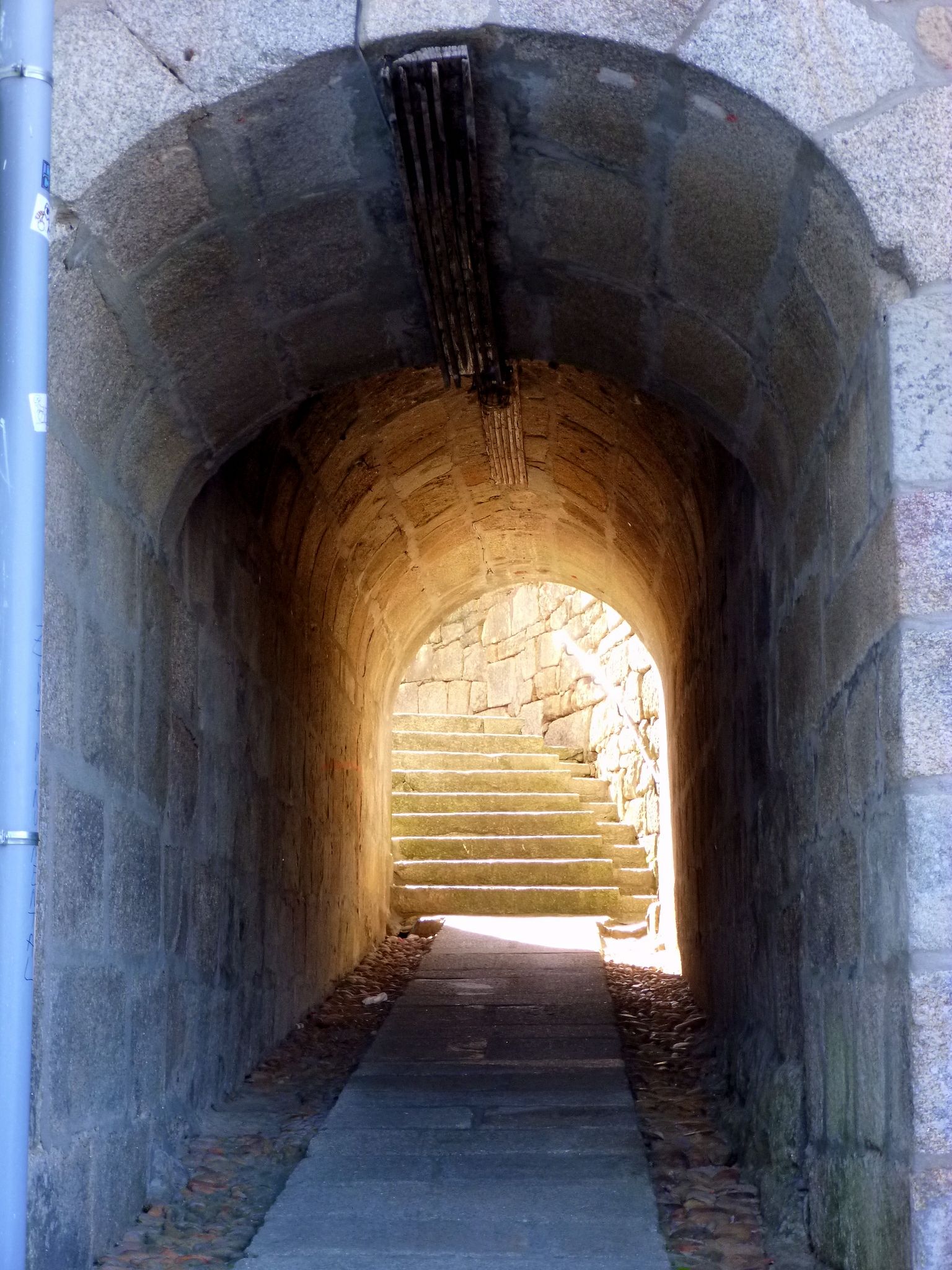
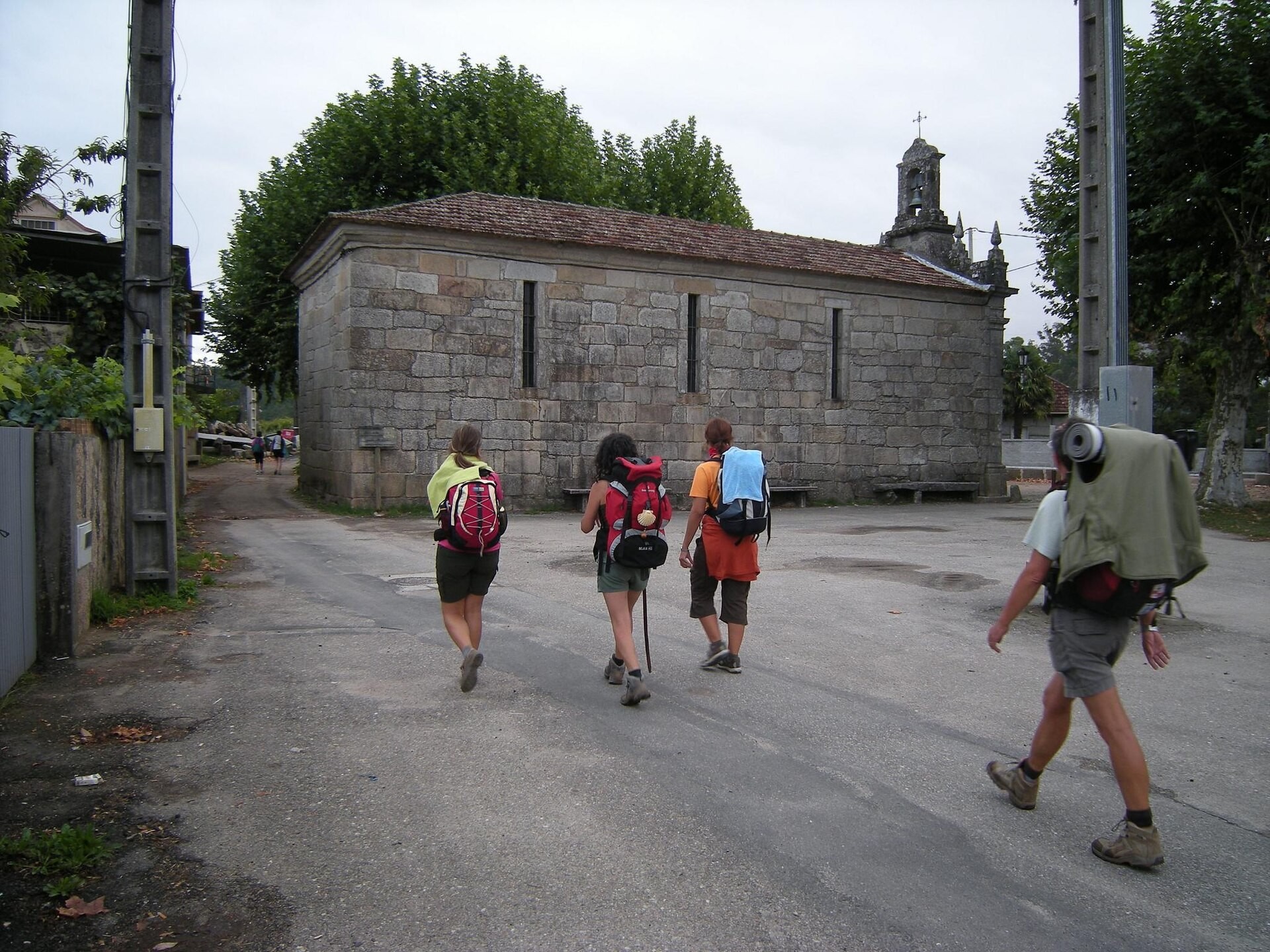


Difficulty
- Basic level: a waymarked path with no technical mountain sections. Splitting it into more days reduces the daily effort.
- More physically demanding: stringing together long days with a backpack. The climb through Mos and the repeated days weigh more than the technical difficulty.
Alternatives
- Tui–Santiago · 115 km · 5–6 stages: the shortest version and the minimum for earning the Compostela on foot.
- Porto–Santiago · about 260 km · 10–12 stages: the full Portuguese route, with more villages and fewer pilgrims at the start.
- Camino de la Costa · about 280 km: the Atlantic variant from Porto, following the Portuguese and Galician coast.
- Individual stages from Pontevedra or Caldas: if you only have a few days, walk the final sections and sleep in hostels without committing to the arrival.
Open Google Maps in satellite view ↗
| Area | What you’ll find |
|---|---|
| Tui / O Porriño / Redondela | The route leaves Tui’s old town and passes through O Porriño and Mos before Redondela. There are alternative routings at some points. |
| Pontevedra / Caldas de Reis | Two towns with services and accommodation that help spread out the nights without following a fixed schedule. |
| Padrón / Santiago | The last section links Padrón with Santiago. If you are after the Compostela, carry your pilgrim passport (credencial) and collect the required stamps over the last 100 km. |
When to go
- Best: spring and early autumn for mild temperatures and a wide choice of accommodation.
- Summer: more pilgrims and more demand for beds; booked rooms give more certainty than hoping each afternoon for a public place.
- Autumn and winter: fewer people, shorter days and more rain. Private bookings matter more if you want every night settled.
Average air temperature (°C)
Portuguese Way in Galicia · monthly averages 2001–2025
Pros
- Public pilgrims’ hostels at €10 per night.
- Villages and services that let you split the route without a single fixed schedule.
- An arrival in Santiago with a continuous route from Tui.
Cons
- Public hostels fill up on arrival and do not accept bookings.
- With a fixed return date, a rest night may mean changing your transport.
Transport
Getting to Tui: Vigo has an airport and train and bus connections. From there, buses run to Tui. If you arrive by train at Guillarei, the station is about 5 km from the centre of Tui.
Rail works: Renfe announced in 2026 that part of the journey between Vigo Guixar and Guillarei is being operated by road during works expected to last about a year. Check the timetable for your date before buying.
- For the Compostela on foot, the Pilgrim’s Office requires at least two stamps a day over the last 100 km. Check its full requirements and carry an accepted pilgrim passport.
Useful FAQs
Do I have to do it in the stages shown in the guides?
No. Those divisions are only a guide. The villages and accommodation let you split the route in different ways; plan your nights around how far you want to walk and what you want to see.
Can I walk without applying for the Compostela?
Yes. You can enjoy the Camino without asking for any certificate. The pilgrim passport and the stamping requirements matter if you want to apply for the Compostela or use accommodation with pilgrim requirements.
What changes if I book all my nights?
You gain certainty about where you sleep and can choose private rooms, but you lose the flexibility to stop earlier or go further. A mix of bookings and open nights is also possible.
How do I get a confirmed bed without relying on the public hostel?
The Galician public network does not take bookings and allocates places on arrival. If you want your nights settled before you set off, choose private hostels that accept bookings. Treat the public rate as a fallback, not a guaranteed bed.
What stamps do I need for the Compostela?
The Pilgrim’s Office requires at least two stamps a day over the last 100 km on foot, in an accepted pilgrim passport. You can get stamps at hostels, churches and other establishments along the Camino. Splitting the walk into five, six or eight days does not replace that requirement.