Sections
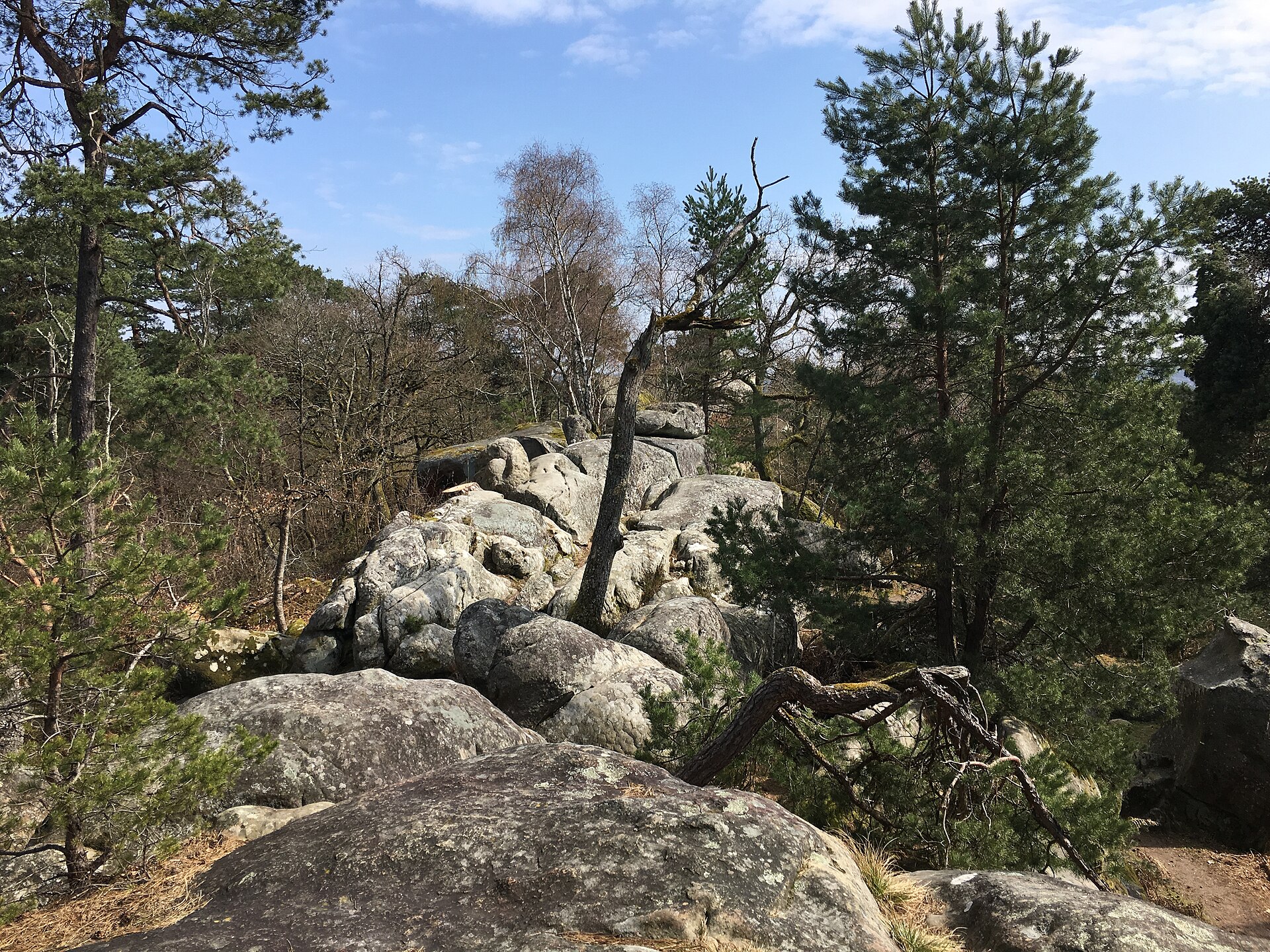
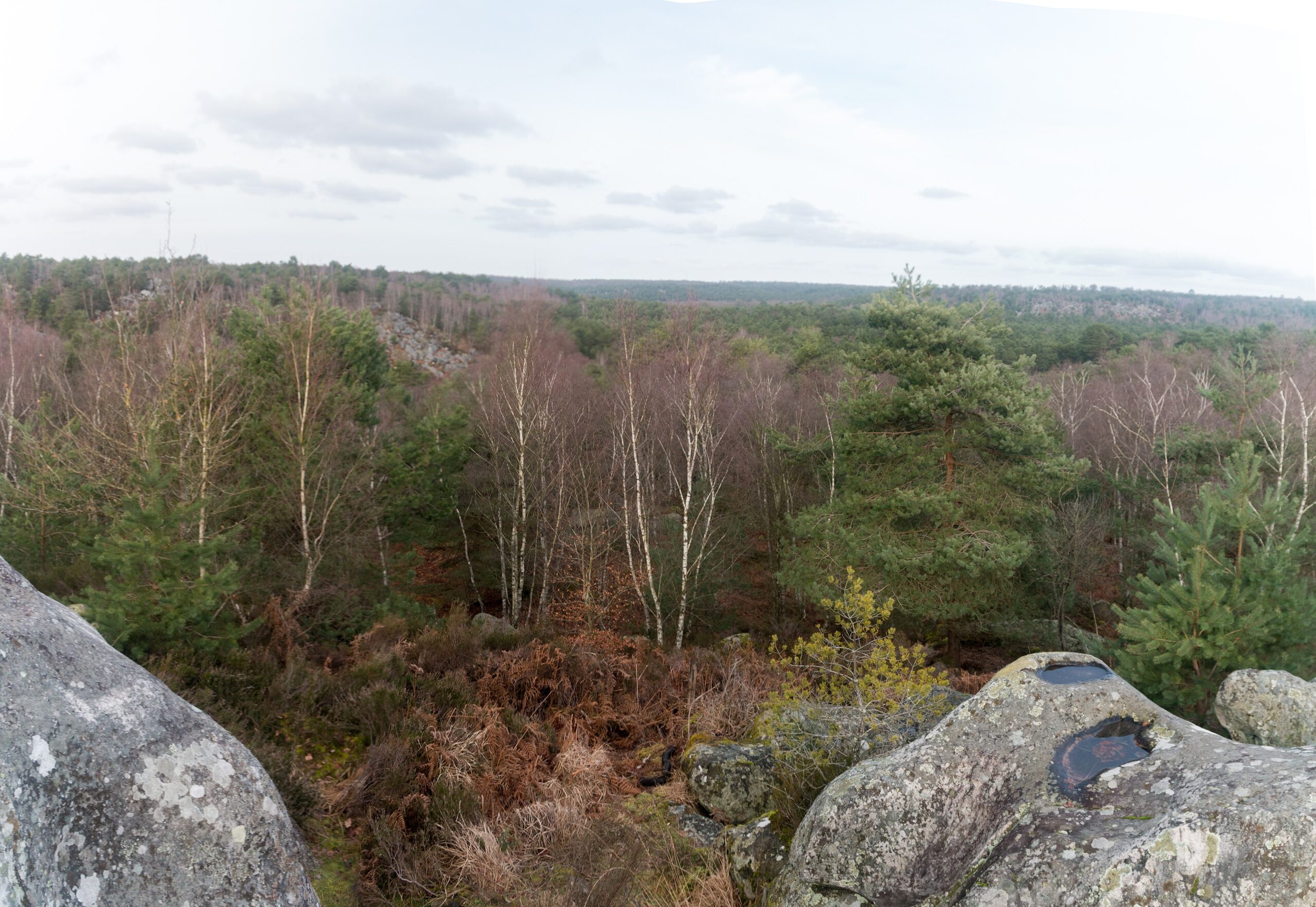
In Fontainebleau the blocks turn up among pines, sand and trails: you can link smooth moves on a circuit or spend an afternoon working a single problem. It is a destination for repeating climbing days without running out of options.
The important choice is not a mandatory circuit but which sectors suit your level and how you will get there from your accommodation. A trip without a car is possible, but it leads to different bases and sectors than a trip by car.
Prices
| Forest access and climbing | Free |
| Authorised bivouac (one night) | Free |
| Campsite | From €6 per night |
| Train from Paris | From €3 per journey |
| Crash pad rental (optional) | From €10 per day |
Getting to the open sectors of the forest and climbing is free. You can spend one night in an authorised bivouac area or choose a campsite as a base for several days. Campsite prices are per person, sharing a tent between two, with your own gear.
Other possible costs:
- Getting to the region: you can reach Paris and continue by train to Bois-le-Roi or Fontainebleau-Avon. Which station works best depends on the sector and your accommodation; check Île-de-France Mobilités.
- Food: accommodation with a kitchen lets you shop in the villages and spend the day on the blocks. The forest sectors do not work as a leisure zone with bars and shops next to every car park.
- Gear: if you are not bringing a crash pad, several rental options exist and some deliver to the station. The cheapest small model and a triple pad have different prices and different coverage.
Authorised bivouac (one night)
The ONF offers free overnight areas for a single night. The official access map marks Bourron-Marlotte as accessible; La Solle and La Faisanderie remain closed after the 2026 fires. The bivouac area has no toilets and no water point. To set up a base for several days, a campsite or accommodation is the better choice.
Campsite
Les Prés, in Grez-sur-Loing, lists a package for two hikers or cyclists with a tent from €10 per night: about €6 per person with the tourist tax. A standard pitch for two starts at €12, about €7 per person with the tax. It is a seasonal campsite on the Loing, outside the bouldering sectors; weigh the travel before choosing it on price alone.

Fontaineblhostel, in La Chapelle-la-Reine, costs €19 per person per night for camping, with kitchen and toilets included and open all year. Île de Boulancourt is another base to compare in the south of the massif, especially if Buthiers and its surroundings interest you.
Hostel, rooms and cabins
At Fontaineblhostel a dorm bed costs €37 for the first night and €29 afterwards. If you want a private bathroom or a kitchen for your group, compare the cabins and equipped lodgings at Île de Boulancourt and the apartments and hotels in the region. Where you are relative to the sector usually matters more than saving a few euros on a distant room.
Transport
A single train ticket from Paris costs about €3 per journey; regional buses use a different ticket, around €2. Check the Île-de-France Mobilités fares. A car widens the choice of sectors and campsites, but you can avoid it by picking a base next to the access you plan to use.
Crash pad rental (optional)
Fontainebleau Crashpads has models from €10 per day or €56 per week. Climbing Explorer lists rentals from €12 per day with delivery charged separately; Climb Fontainebleau offers a triple pad for €15 per day and station delivery for €10.

If you stay at Île de Boulancourt, its rentals start at €25 per week; at Fontaineblhostel the service for guests costs €10 per day. Choosing one size or several pads depends on the blocks you want to climb, so not every rental covers the same need.
Videos
A short film to get a feel for the forest, its blocks and climbing among the trees (3 minutes; music, 2012).
Hannah Morris explains what to expect from a first bouldering trip to Fontainebleau and how to plan the journey (in English, 2020).
Photos



Difficulty
There are options for beginners and for elite climbers. Fontainebleau’s sandstone demands precision: its slabs and rounded holds can catch you out even if you already climb indoors.
- For beginners: the low, straightforward blocks at Rocher Canon or Canche aux Merciers allow a first experience. You do not need to complete a whole circuit to enjoy the area.
- Intermediate level: Canche, Franchard Isatis and other sectors bring together slabs, rounded holds and traverses. You can mix approachable circuits with harder standalone blocks.
- Advanced level: Bas Cuvier, Isatis and many other sectors offer landmark blocks. Choose by style and rock condition, with plenty of options for repeating days without wearing the area out.
Éléphant is full of tall blocks, so I would not treat it as the only area for a first visit even though it has low-grade problems. The block that gives the sector its name is off limits because of rockfall risk.
Alternatives
Circuits or standalone blocks
Circuits link numbered, colour-coded blocks: you can climb many problems of a similar level in one area. You can also choose standalone problems by style or grade and give them more time. Both options let you spend several days in the forest without following a fixed route.
Rocher Canon: a car-free option
Rocher Canon has circuits at different levels and a walk of about 35 minutes from Bois-le-Roi. It is one of the clearest combinations of train and climbing; staying near the station makes it easy to return to the same base without depending on a car.
Canche aux Merciers: to mix levels
Canche aux Merciers brings together easy options and more demanding blocks in a comfortable area for groups with different levels. It is an interesting alternative if you want to centre a day on the forest rather than chase only the most famous blocks.
Franchard Isatis and Bas Cuvier: widening the variety
Franchard Isatis and Bas Cuvier bring plenty of variety and classics for those who already have experience. Check the plan of each sector on Boolder: it places the problems and circuits, whereas a hiking map only gets you as far as the forest.
Accommodation according to how you travel
Without a car: Bois-le-Roi fits Rocher Canon; La Chapelle-la-Reine offers accommodation and walking access to southern sectors, though you walk more. With a car or bike: campsites and outlying villages widen the bases, but pick a cluster of sectors per area so you do not spend the day travelling.
Access and current closures
The fires have left areas with restricted access. The ONF’s official map lets you check access before choosing a sector; not all the trails in the massif are affected in the same way. In Éléphant, the block that names the sector also has a closure because of rockfall risk.
When to go
- Best: spring and autumn. The cooler weather helps the sandstone grip, and campsites are available at low-season prices.
- Less recommended if you are chasing friction: July and August. You can enjoy the forest and climb in the shade, but the heat makes problems on slabs and rounded holds harder.
- Winter: can offer very good rock conditions, although the days are short and several campsites close. A hostel or accommodation open all year makes the trip easier.
- Beware of rain: wet sandstone degrades easily and may need time to dry. A run of several rainy days in a row has a big impact on a short break.
You can check the Météo-France forecast for Fontainebleau.
Pros
- Huge variety of blocks and styles without leaving the forest.
- There are circuits and problems for sharing a trip with mixed levels.
- Some sectors combine train and walking; others fit a campsite and a car better.
Cons
- Rain can leave the rock unusable for part of a short break.
- The massif is large: the cheapest campsite is not always the base with the best access.
- Height, fall and downclimb are not read off the grade alone; several classics do not work as a first experience.
Transport
R line trains connect Paris-Gare de Lyon with Bois-le-Roi and Fontainebleau-Avon. Check Île-de-France Mobilités to choose the station and connection according to your accommodation; they are not two interchangeable ways of reaching every sector.
Bois-le-Roi lets you walk to Rocher Canon. For La Chapelle-la-Reine the bus network includes line 3454 from Fontainebleau-Avon; sectors near the accommodation still require walking. In Grez-sur-Loing and Boulancourt, compare the real journey to the blocks before booking.
If you arrive without a pad, Climbing Explorer and Climb Fontainebleau deliver to stations or agreed meeting points. That is a way to avoid carrying a bulky pad from Paris. With your own vehicle you can combine more sectors, without having to change area every day.
Useful FAQs
Can I do a multi-day trip without a car?
Yes, by concentrating on sectors reachable from your base. Bois-le-Roi with Rocher Canon is a clear choice; La Chapelle-la-Reine allows a different kind of stay, with walks to southern sectors. Trying to visit different ends of the massif every day makes the car-free version much harder.
Is it better to sleep in Paris or next to the forest?
For a break built around several days of climbing, a base next to the access you chose saves the round trips and makes it easy to start or finish whenever you like. Paris fits better if you climb one day inside another trip, or if you prioritise the city in the afternoons.
Can I rent the pad when I arrive by train?
Yes. Climb Fontainebleau lists station delivery; Climbing Explorer offers several delivery points for a supplement. Agree where to collect and return it before booking: the base rental price does not always include both jobs.
Is it a good idea to go in August?
It can work if you are after forest, camping and plenty of blocks, but it suits a trip built around problems that depend heavily on friction less well. Spring and autumn usually give a more interesting mix of climbing and price. A week of rain hurts more than a few hot days.
Can I sleep for free in the forest?
Yes, in an authorised bivouac area and for one night. At present the ONF map marks Bourron-Marlotte as accessible, while La Solle and La Faisanderie are closed. They are simple areas with no toilets or water; if you want a fixed base with facilities, compare the campsites.
Can I check the blocks and their grades without buying a guidebook?
You can explore the sectors and the block listings free of charge on Boolder and Bleau.info. They are climbing resources with problems, grades and locations; the ONF map is for checking access and closures.
Useful links
General information
- Official Fontainebleau tourism website
- Experience and tips from a bouldering trip (in English)
- Bleau.info · climbing and boulder information
Topos and sectors
Access and weather
Crash pad rental
- Fontainebleau Crashpads
- Climbing Explorer · rental and delivery
- Climb Fontainebleau · rental and delivery
Accommodation
- Les Prés · campsite in Grez-sur-Loing
- Les Prés · 2026 rates
- Fontaineblhostel · camping and dorm beds
- Île de Boulancourt · campsite and equipped lodgings
- Compare rooms and apartments in the region